Padel court glass breakage: the real cost of a preventable problem
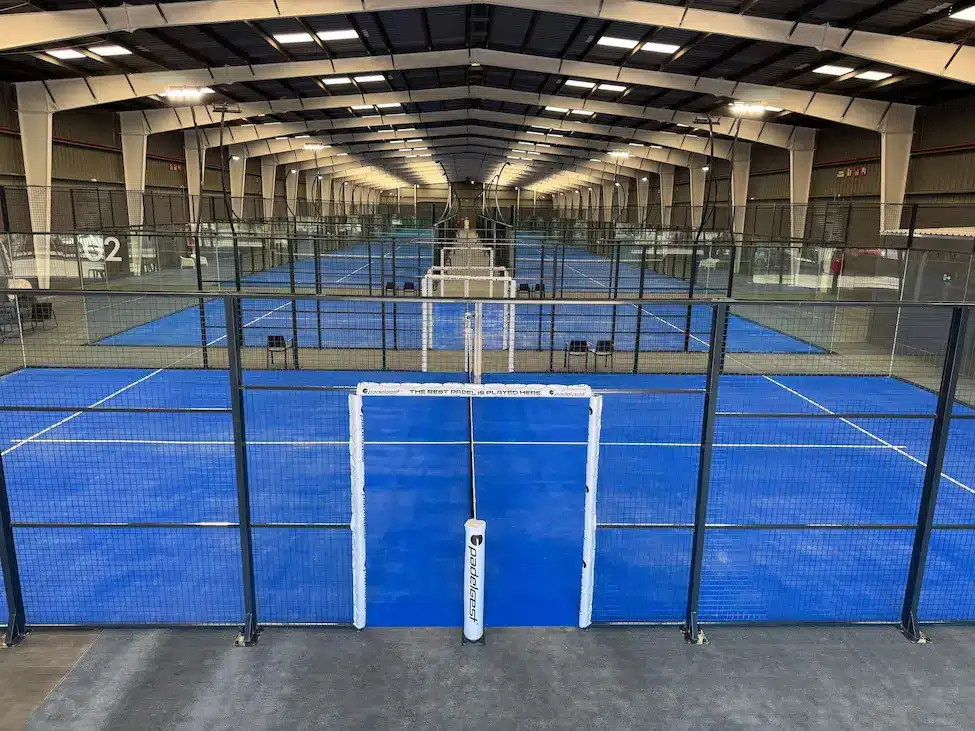
Glass is one of the most important components of any padel court. It defines the playing area, shapes how a match unfolds, and it’s usually the first thing a player notices when stepping onto the court. This is a component that has to withstand repeated impacts, structural loads, and temperature swings all year round.
When a panel breaks, the consequences go well beyond replacing a piece of glass. The court is out of action, and the club has to cover the cost of the replacement, the installation, and, in some cases, further repairs.
This happens more often than most operators think, especially on courts where the materials, installation, or maintenance fall short of the required standards. That’s why it’s worth understanding what replacing a panel actually involves, and above all, how to cut downtime and avoid unnecessary costs.
Why does padel court glass break?
Several factors can contribute to glass breakage, from player impact to the way the glass is supported and fixed in place, as well as the conditions the panel is exposed to over time.
Direct impact from players can put significant stress on the panel. However, problems with the way the glass is supported or fixed can also create tension that, over time, can lead to fracture, particularly at the edges, corners, and fixing points.
Direct contact between the glass and the metal frame, movement in the court’s structure, or excessive pressure at the fixing points can all contribute to this type of stress.
The installation of the fixing system is therefore critical. Incorrectly aligned structures, excessive pressure from fixings, or poorly fitted components can create localised stress in the glass and increase the risk of breakage.
Temperature changes also play a role. Glass responds to thermal variation, and differences in temperature across the same panel can create additional tension. This matters particularly on outdoor courts exposed to direct sunlight and significant temperature swings.
Other causes
Spontaneous breakage can also occur under certain conditions. One possible cause is nickel sulphide inclusion. These are microscopic particles that can become trapped in the glass during manufacturing. After the tempering process, changes in these inclusions can generate internal tension and, in rare cases, cause a panel to shatter with no obvious external impact.
However, spontaneous breakage is not necessarily the result of a defect in the glass itself. There are many variable conditions unrelated to the glass that can contribute to it, including changes in temperature and other environmental factors.
This is where the Heat Soak Test comes in. Tempered glass is held at a controlled temperature of around 290 °C (554 °F), a process designed to trigger failure in panels with problematic nickel sulphide inclusions and remove them before the glass ever reaches the court. It’s a process set out in the EN 14179 standard.
Heat soaking doesn’t eliminate every possible cause of breakage, but it does significantly reduce the risk tied to this specific type of spontaneous failure.
What does the replacement process involve?
The replacement process should start with understanding why the breakage happened. Swapping the glass without fixing an underlying installation or structural issue just sets up another panel to break down the line.
The new panel has to be manufactured to the court’s exact specifications. Dimensions, thickness, edge finish, corner shape, and the position of the fixing holes all have to match the existing system. The glass also has to meet the applicable safety standards, including EN 12150 for thermally toughened safety glass.
The fixing holes matter too, and more than most people realise. Tempered glass can’t be drilled or cut after tempering, so every hole’s dimensions and position have to be defined before manufacturing. The holes should be correctly countersunk, with the appropriate conical geometry and a good fit with the plastic bushings. Modifying the glass afterwards can compromise its integrity and create a point of failure.
The plastic bushings themselves are also an important part of the fixing system. They need to be made from quality plastic and treated as a maintenance component, not as a permanent part of the court. Bushings have a service life and should be replaced as part of scheduled maintenance, or earlier if any defects, wear, or damage are identified.
How can glass breakage be prevented?
Prevention starts long before the court opens its doors. The quality of the glass matters, but so does how it interacts with the rest of the structure.
Glass should never sit in direct contact with metal. EPDM or neoprene gaskets act as a barrier between the glass and the structure, absorbing movement and reducing localised tension.
The edges also need to be properly finished and polished, particularly around the corners and fixing points, where any damage can have a greater impact on the panel’s strength. Corners should be rounded rather than simply polished, helping to reduce areas where stress can concentrate.
The fixing system requires the same attention to detail. Holes need to be correctly countersunk and have the appropriate conical shape to ensure a proper fit with the plastic bushings. Using high-quality bushings and replacing them when they reach the end of their service life helps prevent unnecessary stress from being transferred to the glass.
The structure has to be aligned and level. Fixings should be tightened to the manufacturer’s specifications, not to the maximum torque possible. Excess pressure at the fixing points transfers unnecessary tension directly into the glass.
Material choice matters on outdoor courts too. Components exposed for long periods to sun, temperature swings, and the elements need to hold their properties over time. A court can look perfect on opening day, but its performance over time depends on how those materials age after months and years of use.
Maintenance can’t be an afterthought either. Regular inspections help catch movement, loose fixings, damaged bushings, or shifts in alignment before they turn into serious problems. Checking clamps, anchors, gaskets, and fixing components as part of that routine is key to staying ahead of failures.
You can read more about how to choose a padel court manufacturer in our article on choosing the right padel partner.
A broken panel is usually a warning sign
A broken glass panel isn’t always an isolated incident. Sometimes it may be the result of a combination of environmental, structural, or impact-related factors. Other times, it points to a deeper problem with the glass, the structure, the installation, or the court’s maintenance.
Replacing the panel solves the immediate issue, but understanding why it broke is what stops it from happening again. For a club, that means less downtime, fewer unexpected costs, and a safer court for everyone who plays on it.