Padel court floor: Types and qualities
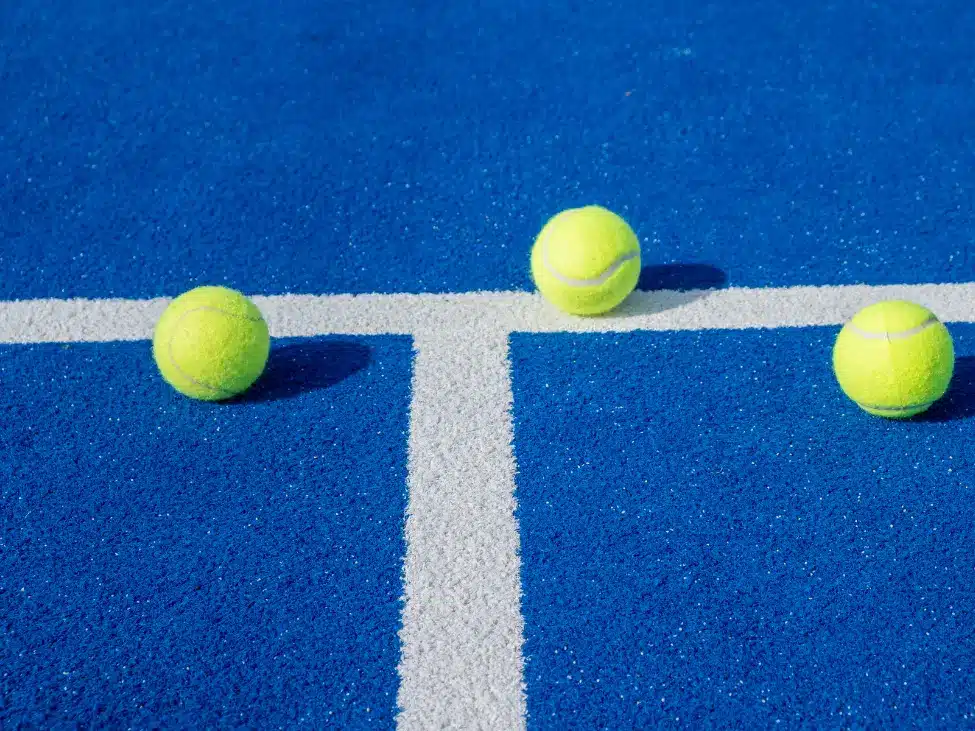
The floor of a padel court is one of those decisions that looks straightforward on paper but ends up shaping everything: how the court plays, how it ages, and how it looks day after day. Choosing the right surface is not just a technical matter. It shapes the experience of every player who steps onto the court, from the casual weekend player to the competitive club member training five days a week.
As we covered in our guide on types of padel courts, artificial turf has become the dominant surface worldwide, virtually replacing cement in all new installations. Within that category, however, not all surfaces are equal. The choice between monofilament and texturized grass, and the amount of sand infill used, defines the character of the court entirely.
Monofilament grass: Built for intensity
Monofilament turf is made up of individual straight fibers, dense and upright. This structure gives the surface a firmer feel underfoot and produces a faster, more dynamic game. The ball travels with greater speed and the bounce is more predictable, which tends to suit experienced players who value a technical, aggressive style of play.
Beyond gameplay, monofilament grass is the more durable of the two options. Its straight individual fibers are more resistant to heavy use and maintain their vertical position over time, which means the surface holds its performance characteristics for longer. For clubs with multiple daily sessions and high player turnover, this makes monofilament the natural choice for long-term return on investment.
Texturized grass: Elite competition standard
Texturized turf is built differently. Its fibers are curled consequently interlaced forming a denser, more interwoven structure that allows better grip on the player’s stance as well as increased friction on the ball. The result is a slower game with more controlled slides and a surface that rewards players who rely on placement and consistency rather than raw pace.
Visually, texturized grass has a distinctly fuller and more uniform appearance. No infilled sand is noticeable from the top which makes it neater. The dense, carpet-like finish creates a cleaner aesthetic on the court, which is particularly valued in showpiece installations, private facilities, and high-profile competition venues where the visual impression matters as much as the technical performance.
The tradeoff is durability. The networked fiber structure is more susceptible to wear over time compared to monofilament, making texturized turf better suited to lower-frequency use, private courts, or professional competitions where court rotation and maintenance schedules are carefully managed.
Sand Infill: How it shapes the game
Sand infill plays a decisive role in how both surface types perform in practice. A higher sand level increases traction and accelerates play, while courts with lower sand infill provide more grip, slow the game down, and contribute to the visual cleanliness that makes texturized surfaces look so striking. For premium installations where the spectator experience and on-court aesthetics are a priority, lower infill levels combined with textured grass deliver an impressive result that stands out from standard configurations.
Choosing the right surface for your project
The right floor depends on what the court needs to deliver. For a commercial club with continuous daily use, monofilament turf offers the durability and consistency to withstand intensive schedules without frequent maintenance interventions. For a private facility, a boutique club, or a court built for competition and events, texturized grass provides the visual impact and playing feel that elevate the overall experience.
At Padelgest, we work with a carefully selected supplier to offer both surface types at the highest quality available, ensuring that whichever option fits your project, the installation meets professional standards from day one. And since the floor is only one part of the equation, if you are still deciding on the overall character of your court, our guide on padel court colors walks you through every approved option and what each one communicates about your facility.
Ready to choose the floor for your project? Contact our team and we will find the right surface for your needs.