Beyond the court: The power of building a padel community
There is a version of a padel club that works fine: courts are booked, matches are played, revenue comes in. And there is another version, harder to build but far more valuable, where members do not just show up to play, they show up because they genuinely want to be there. The difference between the two is rarely about the quality of the courts. It is about whether the club has managed to create something that feels like a community rather than a booking system with glass walls.
Why community building cannot be an afterthought
Padel’s social format is not a marketing angle, it is the actual product. Worldwide, the sport counts around 35 million amateur players, and more than half of them play at least once a week. That frequency is rare in sport, and it points to something specific: people are not just coming back for the game, they are coming back for the people. Multi-court clubs that pair their facilities with integrated social spaces, for example, report retention rates up to 30% higher than venues focused purely on court rentals, and the clubs known for prioritizing community consistently see annual renewal rates that top 90%.
What a strong value proposition actually looks like
Members notice the details that make a club feel designed around them rather than just rented out to them. Locker rooms that are clean, spacious, and genuinely comfortable signal respect for the player’s time. A pro shop does more than sell paddles, it reinforces the club’s identity and gives members a reason to linger after their match. And then there is the café or restaurant, which often ends up functioning as the actual heart of the club, the place where post-game conversations turn into friendships, and friendships turn into the reason members renew year after year.
Community as a long term strategy, not a launch tactic
The clubs that build real communities do not sit down after opening day and ask themselves how to create one. They think about it before the first court goes in: where people will sit after a match, whether there is a reason to stay for another hour, what the place feels like on a quiet Tuesday evening. A weekly league, a beginner session, a round-robin where you end up playing with three people you have never met before, these things sound small but they are what separates a place people visit from a place people belong to. And the numbers support it: members who get involved in organized activities, rather than just showing up to book a court, are far less likely to disappear when their membership comes up for renewal.
There is also a bigger picture worth keeping in mind. Padel has not grown in isolation. Over the last few years it has become part of how a lot of people think about their time outside of work, alongside health, good design, and social experiences that actually feel worth having. That connection to a broader lifestyle is something the sport has earned honestly, and clubs that understand it tend to attract members who see the place as part of their life rather than just somewhere to exercise.
Designing facilities that support the community you want
A club’s physical layout either makes community building easier or gets in the way of it. Sightlines between courts and social areas, the placement of a café relative to the action, enough room for people to gather without crowding the entrance: these are design decisions with real consequences, not details to sort out later. The clubs that invest in this thinking from day one are the ones that end up with waiting lists rather than empty time slots.
Finally, it is worth keeping the goal in mind. A padel court gets people through the door once. A padel community is what brings them back.
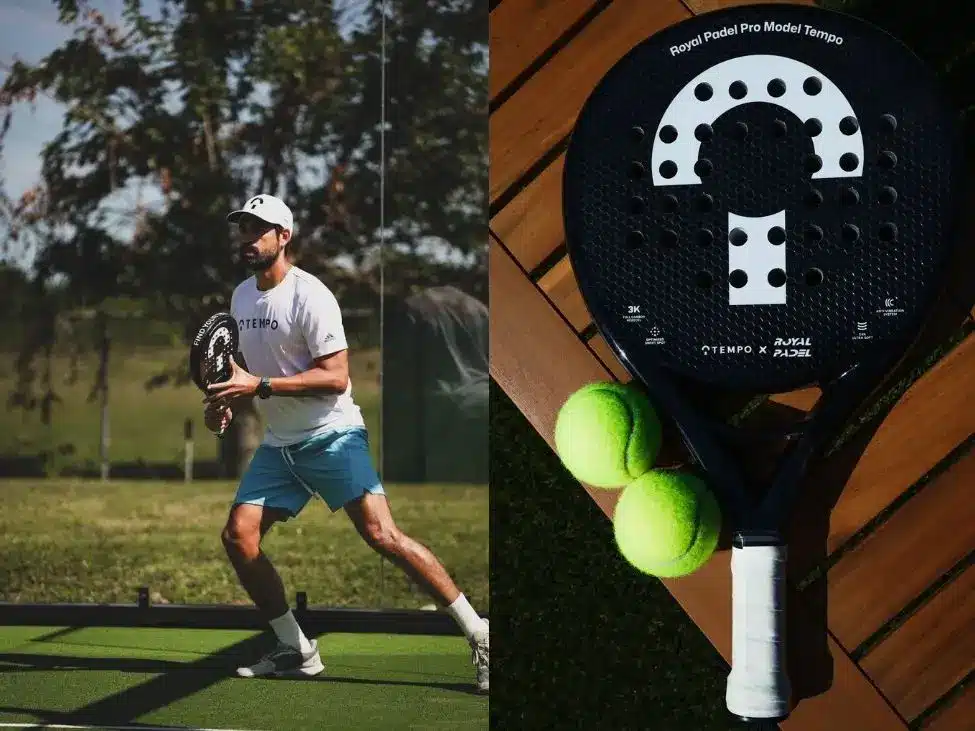
Building that kind of community starts long before opening day, and every club finds its own path there. Permits, costs, the kind of members you want to attract, the location: the right choices depend on the scenario in front of you, and getting them right early shapes everything that follows. We have accompanied many clubs through the launch of new projects and the transformation of existing businesses, several of which are now genuine success stories, including TEMPO Padel and Pickleball Club in Houston, a club built around exactly the kind of community this article is about. Get in touch with us, and we will help you work out the options that fit your own project.